
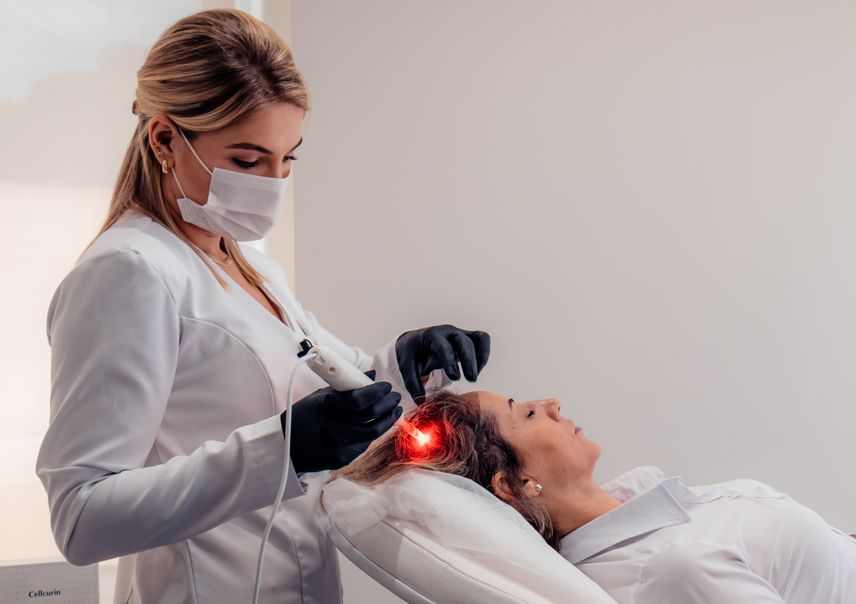
PRP (Platelet-Rich Plasma) therapy for hair loss is indeed a "natural" approach in the sense that it uses your own blood components, but it is more accurately described as a biologically assisted regenerative treatment, rather than a "cure." Its core mechanism is to use growth factors concentrated from your own blood to stimulate dormant hair follicles and prolong the hair growth phase. However, the evidence for its efficacy is not entirely consistent, and its effects are not permanent, requiring ongoing maintenance.
How It Works and What It Is
The PRP process is not complex: a small amount of your blood is drawn, placed in a centrifuge to separate and concentrate the platelets and growth factors in the plasma, and then injected into the scalp areas where hair thinning is occurring. These growth factors are believed to "awaken" hair follicles that are in a dormant state, improve blood supply around the follicles, and thereby promote hair growth. Because it uses your own tissue, the risk of allergic reactions is extremely low, and side effects are typically limited to temporary redness, tenderness, or mild itching at the injection site.
What the Evidence Says
The research on PRP for androgenetic alopecia (pattern hair loss) is fairly extensive, but the conclusions need to be viewed with caution.
Signals of Benefit: A 2025 clinical study showed that after 3 PRP treatments, the average hair density of patients with androgenetic alopecia increased from baseline 40.76 to 66.00 at week 12, with a statistically significant difference; the proportion of positive hair pull tests also decreased from 75.6% to 12.2%, and 97.6% of patients were satisfied with the treatment outcome. Other systematic reviews also suggest that PRP may improve hair density and thickness.
Limitations and Heterogeneity: However, higher-quality evidence remains insufficient. Multiple systematic reviews point out that existing studies generally have small sample sizes, inconsistent PRP preparation protocols and treatment frequencies, and the overall certainty of evidence is not high. More importantly, the effectiveness of PRP appears to be related to the severity of hair loss: a retrospective study found that patients with mild to moderate alopecia showed significant improvement after PRP treatment, while those with severe alopecia improved poorly (only 16% showed increased hair density).
Key Realities to Know
If you are considering PRP, the following points can help you set realistic expectations:
Not a One-Time Treatment, Requires Maintenance: PRP is not a permanent solution. A typical regimen is 3 to 4 initial treatments, spaced about one month apart, followed by maintenance treatments every few months. Results typically begin to appear after 3 to 6 months, because hair growth itself is a slow process.
Not Suitable for Everyone: PRP is most suitable for people who still have active hair follicles and are in the early to moderate stages of hair thinning. If the hair follicles have completely miniaturized and the scalp is smooth and bald, PRP alone is unlikely to produce significant results.
Extremely Rare but Serious Risks: Although PRP is generally considered safe, a 2025 case report documented a case of reversible vision loss following PRP injection for hair loss. The report hypothesized that this may be related to a systemic inflammatory response triggered by growth factors, and recommended that informed consent include this extremely rare but serious risk. This does not mean you need to be overly alarmed, but it does indicate that this is not a "completely risk-free" spa treatment; it should be performed by a qualified physician.
Combination Therapy May Be Better: Research suggests that the effect of PRP combined with microneedling may be superior to injection alone; and combining with topical minoxidil may also yield better results.
In summary: If you are in the early stages of hair thinning and want to try a relatively "natural" adjunctive treatment, PRP is an option worth discussing with your doctor. However, be sure to manage your expectations: it is not a magic cure, requires multiple treatments and long-term maintenance, and the results vary from person to person. It is best to consult a dermatologist or a doctor specializing in hair restoration to determine whether you are a suitable candidate and to develop a reasonable treatment plan.